MAGNET-AD is a state-of-the-art spatiotemporal graph neural network (STGNN) built for early prediction of Alzheimer’s Disease (AD) progression. It tackles two clinically critical tasks—forecasting time to AD conversion and estimating Preclinical Alzheimer Cognitive Composite (PACC) scores—by modeling longitudinal changes in brain structure and integrating static genetic data. MAGNET-AD is designed to enhance interpretability while achieving high predictive accuracy for preclinical Alzheimer’s diagnosis and monitoring.
Key Contributions of MAGNET-AD
Hybrid Spatiotemporal Fusion: MAGNET-AD introduces a novel graph framework that combines dynamic neuroimaging and static genetic features using a dual attention mechanism over spatial and temporal dimensions.
Multitask Learning for Cognitive Decline and Conversion Risk: The model jointly predicts cognitive scores (PACC) and time to conversion, leveraging shared biological underpinnings for improved performance.
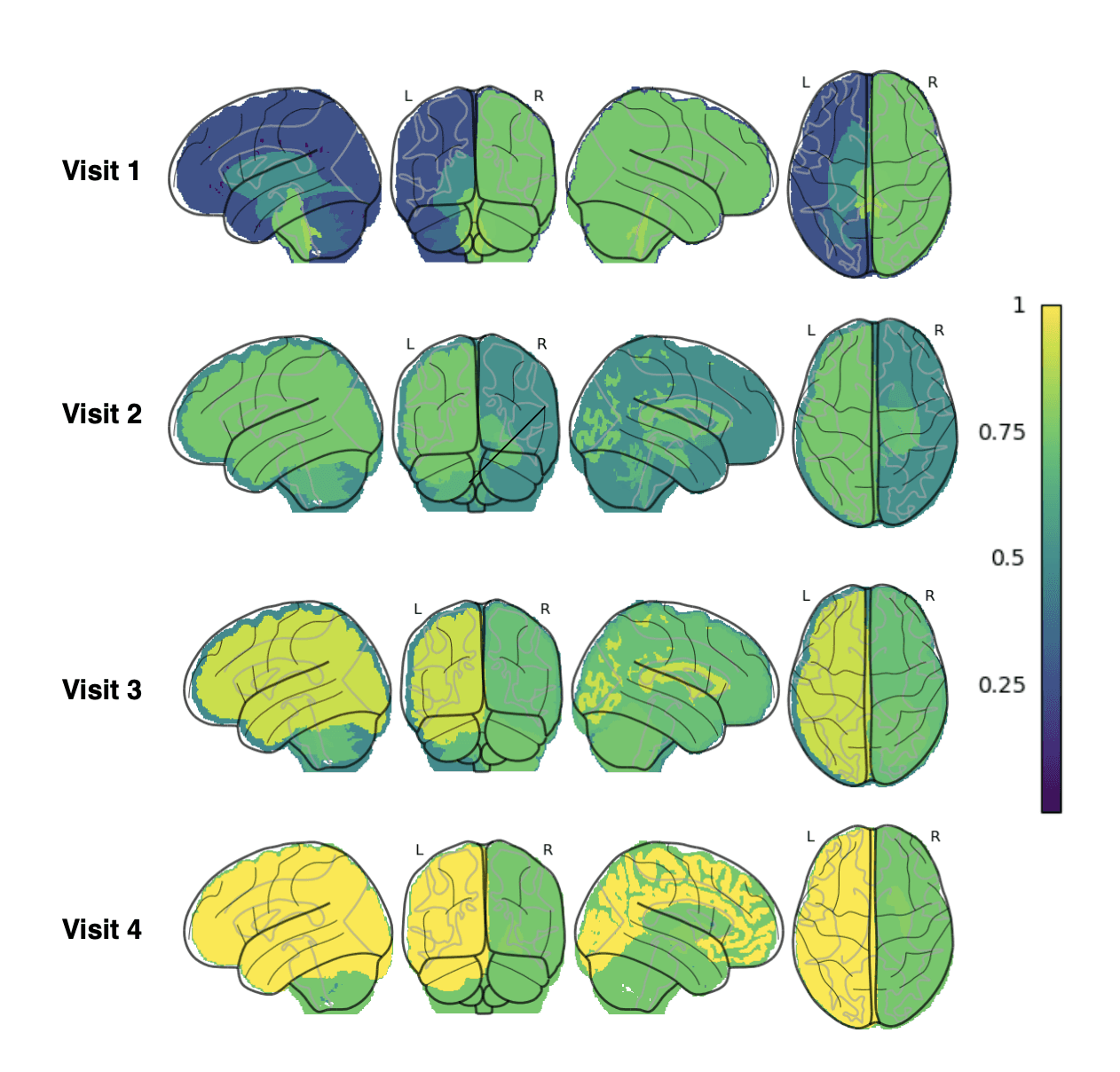
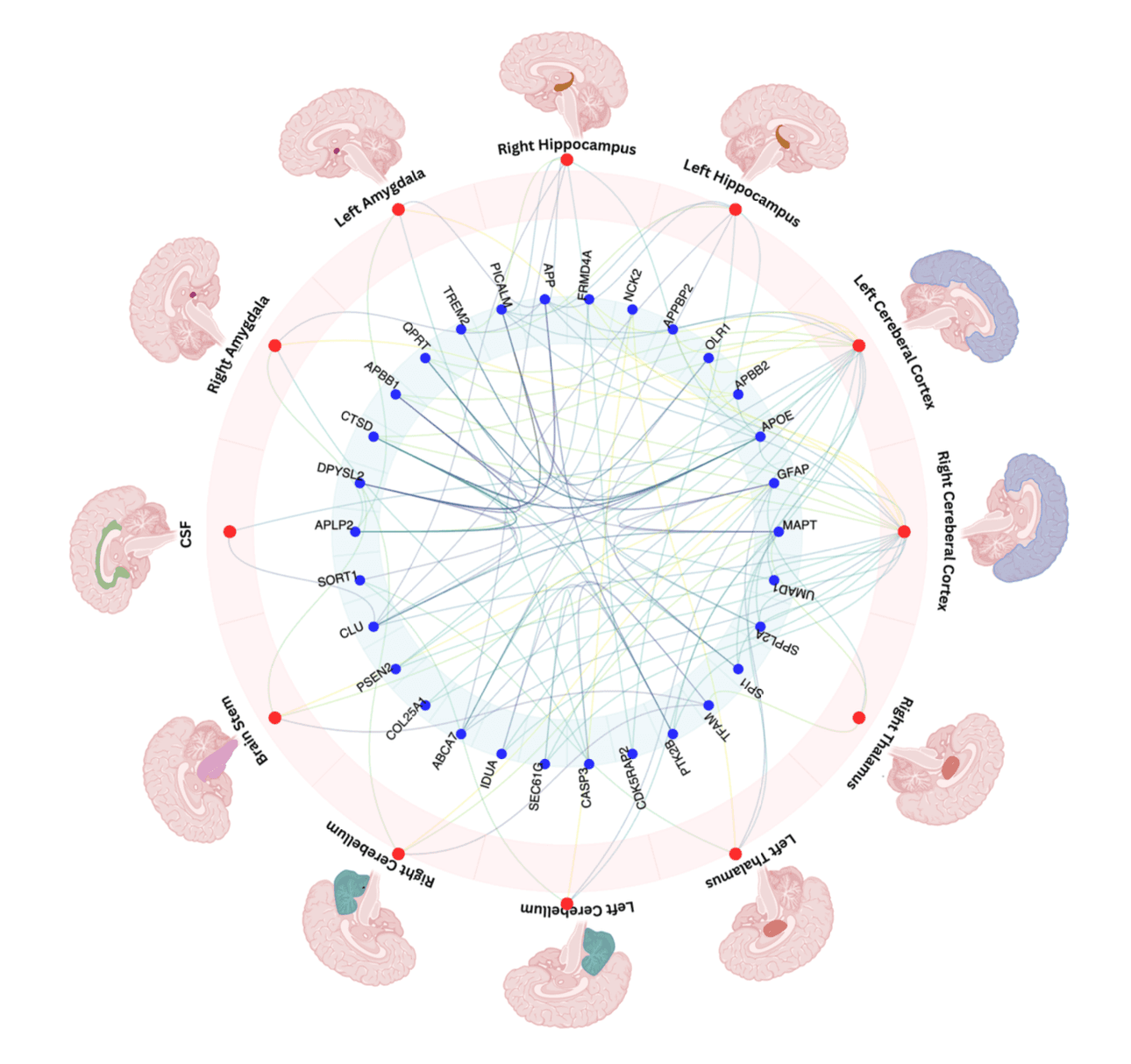
Interpretable Dual-Attention GNN: It highlights the evolution of AD via attention-based insights into key brain regions and gene interactions, aligning with known Braak staging patterns.
Temporal Importance Weighting: A novel loss function adaptively emphasizes clinically significant time points in disease progression, offering robustness to irregular patient visits.
AI Implementation in MAGNET-AD
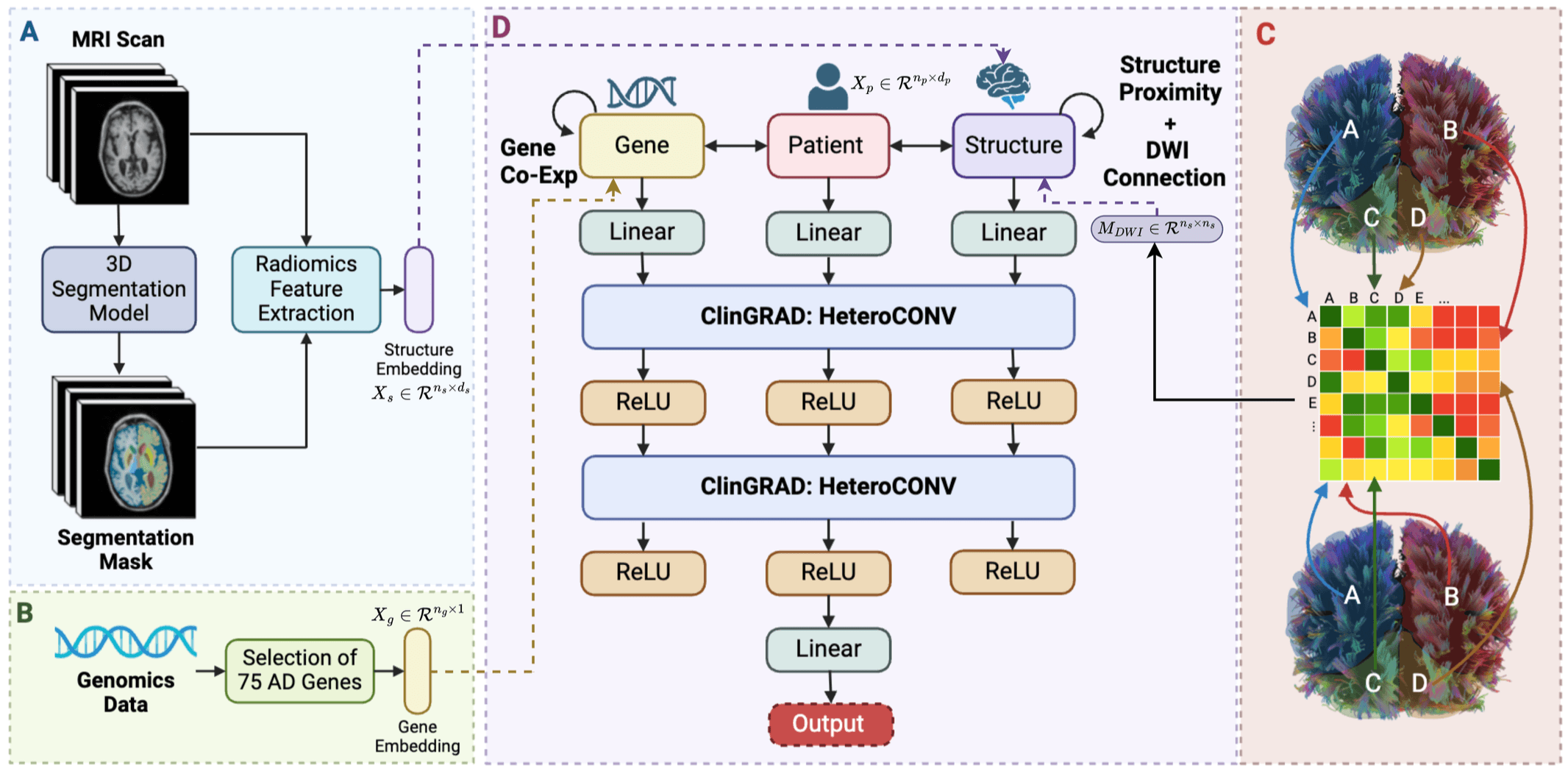
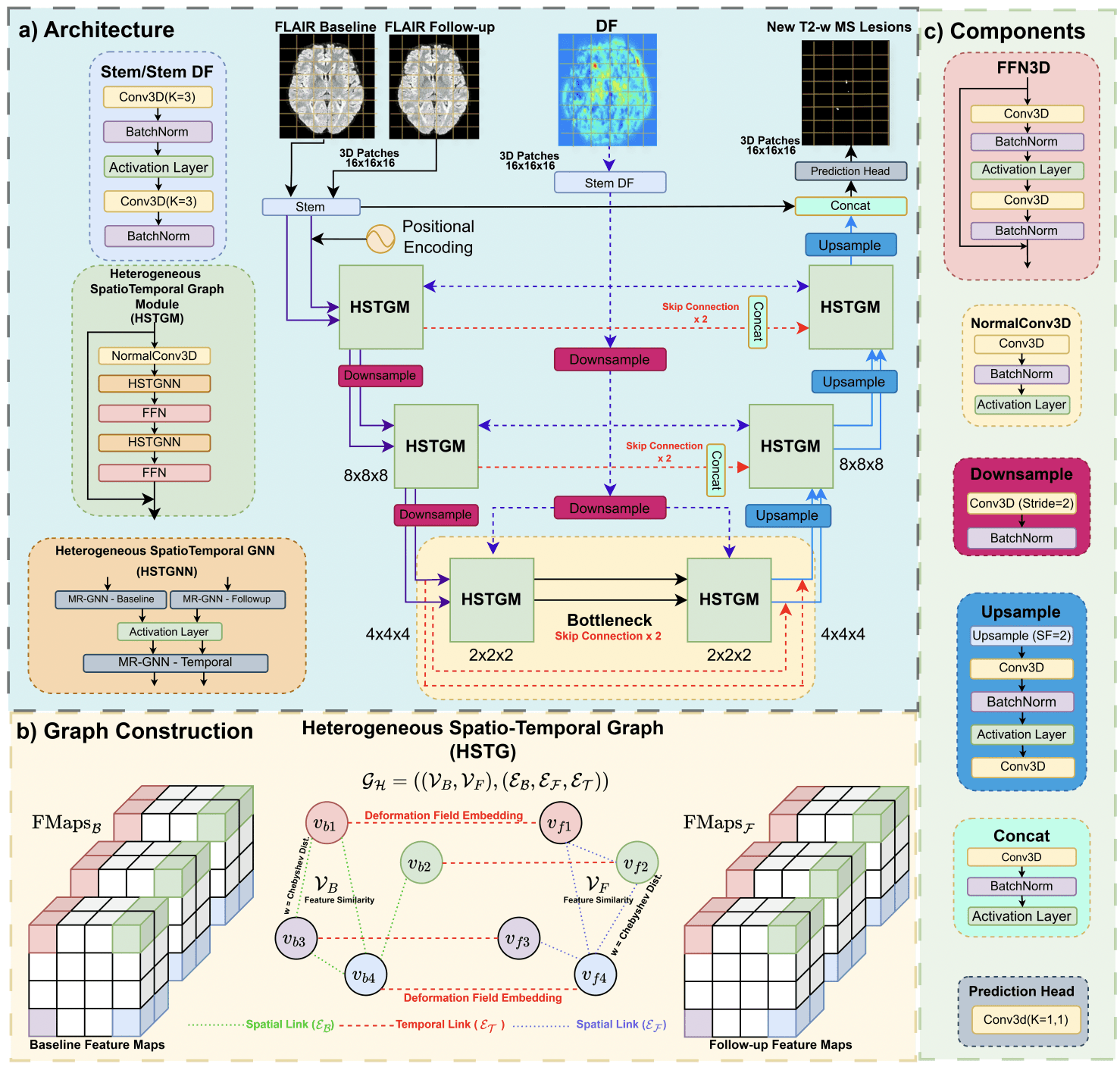
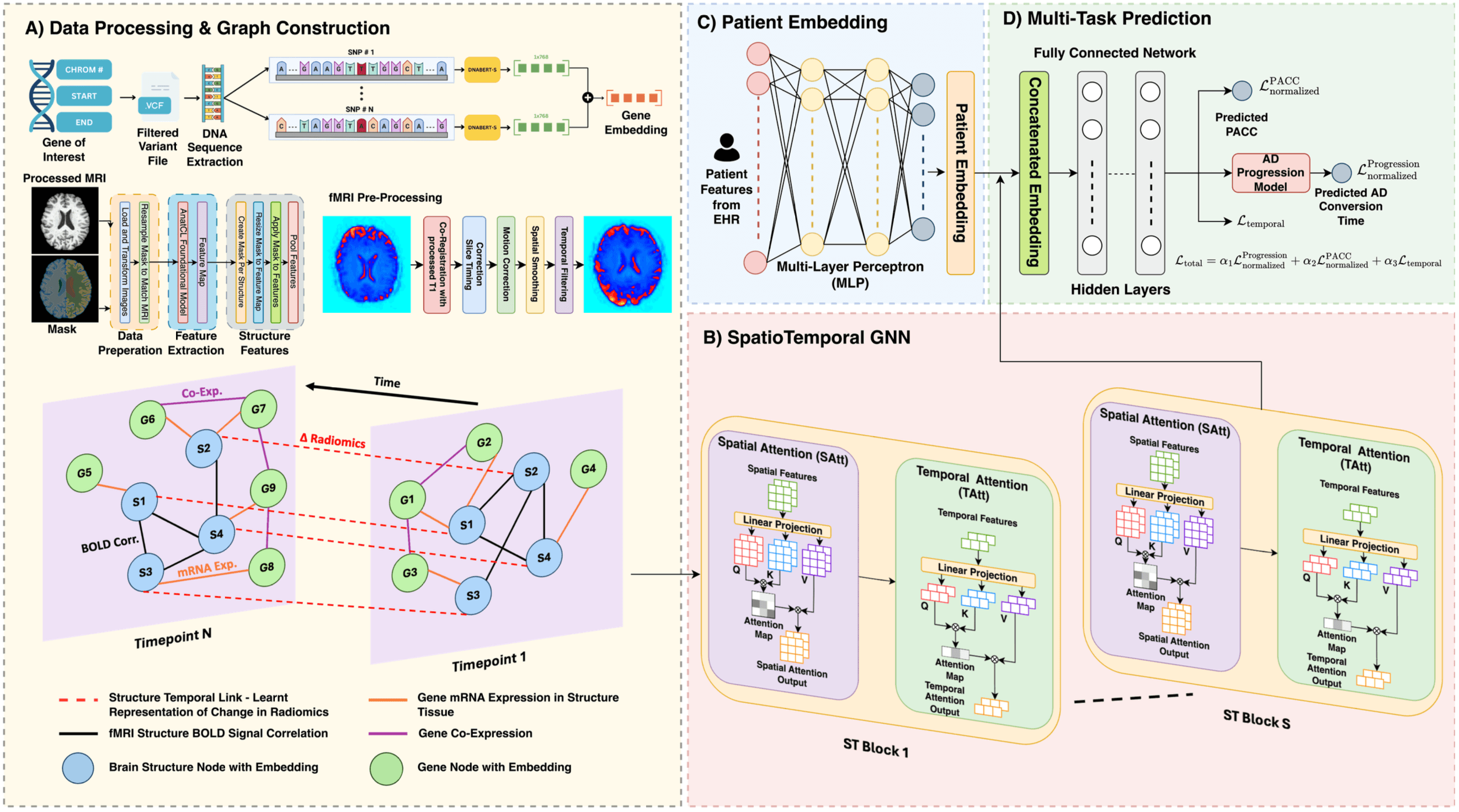
Heterogeneous STGNN Architecture: The graph consists of brain structure and gene nodes, with dynamic temporal connections (radiomic progression), static gene-gene and gene-structure edges, and a dual-attention mechanism (spatial and temporal).
Cross-Modal Attention (Spatial): Models gene-to-structure relationships at each timepoint using multi-head attention.
Edge-Weighted Temporal Attention: Encodes structural changes across visits based on radiomic features, allowing the network to focus on clinically relevant time dynamics.
Multi-Task Heads: Outputs are generated for both PACC (regression) and time-to-conversion (survival analysis) using a hybrid loss that balances ranking, regression, and temporal consistency.
Methodology
Data Integration and Preprocessing
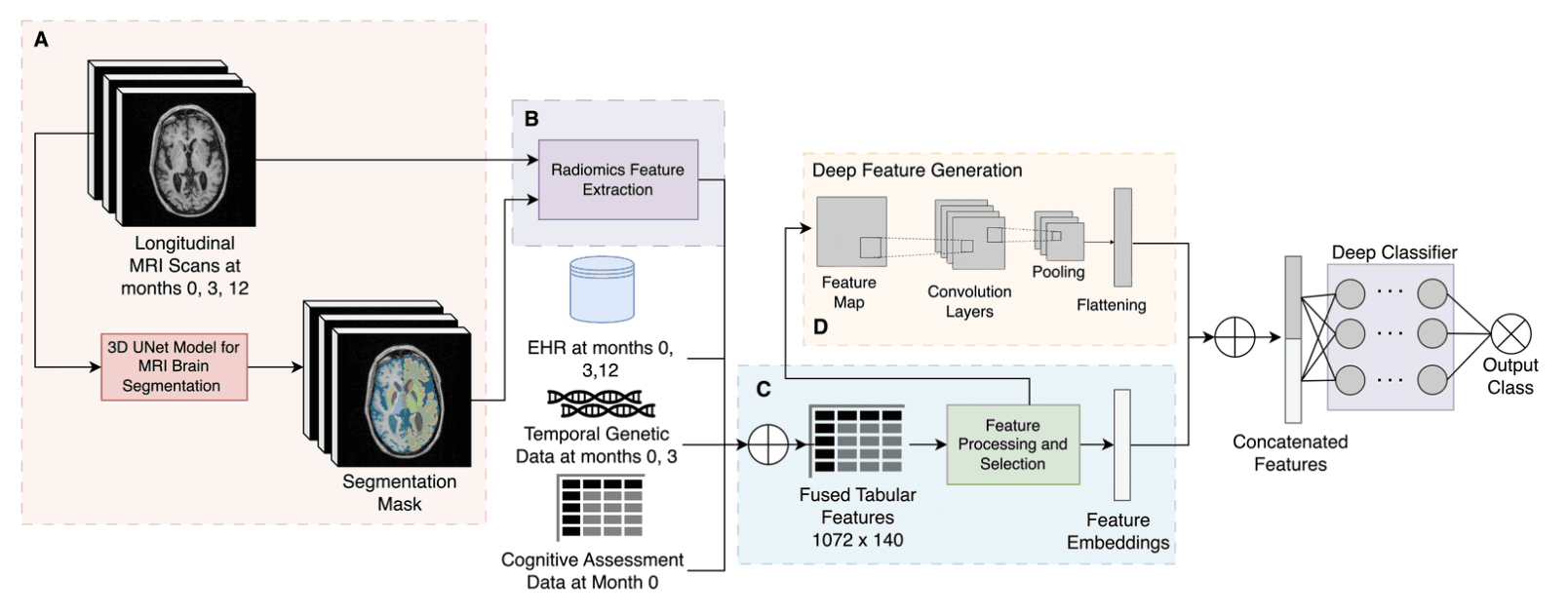
Neuroimaging: T1 MRI normalized to MNI152, followed by brain extraction, SynthSeg-based segmentation into 32 structures, and radiomics feature extraction. Feature embeddings generated via AnatCL foundation model.
Genetics: 100 AD-associated genes processed using DNABERT-S for embeddings. Gene-gene co-expression and gene-structure expression profiles included.
EHR: Patient-level features (e.g., clinical scores) included for downstream tasks.
Graph Construction
Nodes: Represent brain structures (dynamic) and genes (static).
Edges: Include:
Temporal structure–structure edges weighted by radiomics changes.
Gene-gene co-expression edges.
Gene–structure edges based on expression linkage.
The temporal graph spans multiple visits, modeling disease progression over time.
Modeling and Learning
Attention Layers:
Spatial Attention (SAtt): Captures gene–structure interactions at each visit.
Temporal Attention (TAtt): Models structure evolution over time via learned radiomic-based edge weights.
Hybrid Loss:
Combines:
Normalized concordance index loss for time prediction.
Mean squared error for PACC regression.
Temporal regularization loss for adaptive timepoint weighting.
Prediction and Interpretation
Patient embeddings from EHR are concatenated with graph outputs.
Dual prediction heads perform regression (PACC) and ranking (conversion time).
GNN attention outputs are analyzed for clinical interpretability—e.g., identifying important brain structures and gene clusters over time.
Results
Superior Predictive Accuracy: Achieves a C-index of 0.858 and PACC MSE of 1.983, significantly outperforming LSTM, Transformers, and standard GCN-based STGNNs.
Interpretability Validated by Neuropathology: Attention patterns align with Braak staging, capturing the canonical spread of tau pathology from medial temporal to neocortical regions.
Temporal Robustness: Maintains high accuracy even with just 2–3 patient visits, proving effective in real-world scenarios with limited longitudinal data.
Ablation Studies Confirm Design Benefits:
Adding gene–structure edges gives the biggest performance boost (↑ C-index by ~12%).
Temporal edge weighting and gene-gene edges provide additional gains.
Conclusion
MAGNET-AD offers a unified, interpretable, and high-performing solution for early AD monitoring using multimodal data. Explicitly modeling spatiotemporal disease dynamics and incorporating genetic risk factors sets a new benchmark for progression modeling in preclinical AD. The hybrid fusion approach and temporal weighting offer strong generalizability to clinical deployment and future extensions such as blood biomarker integration or personalized treatment planning.