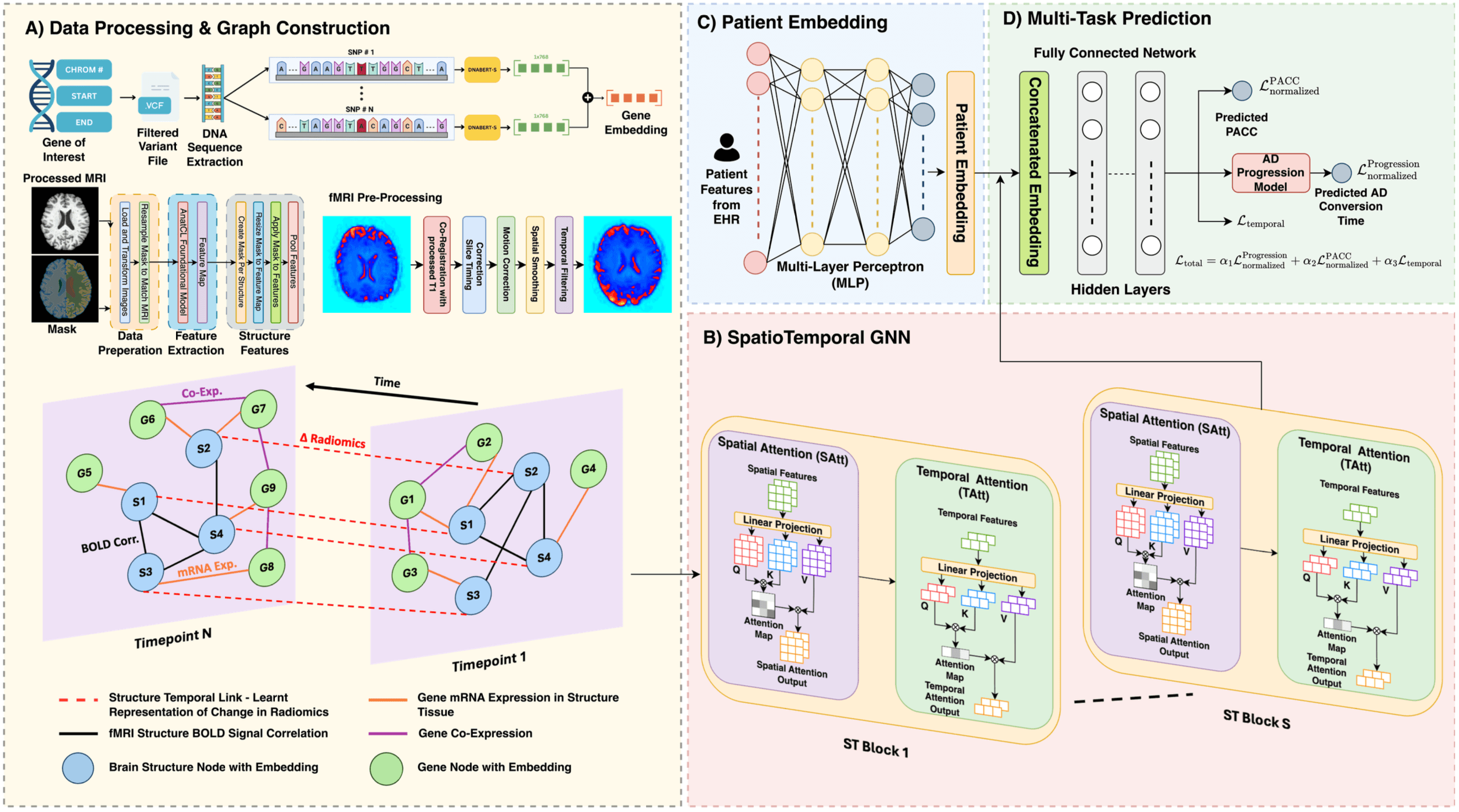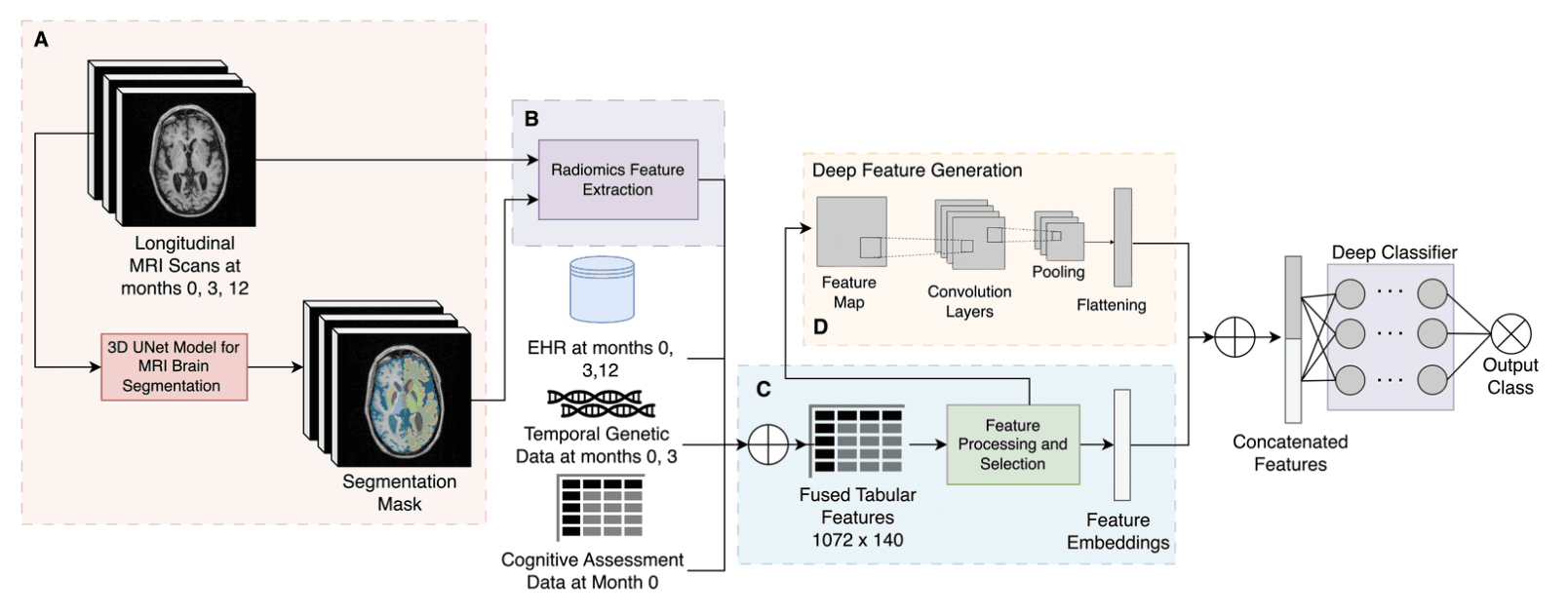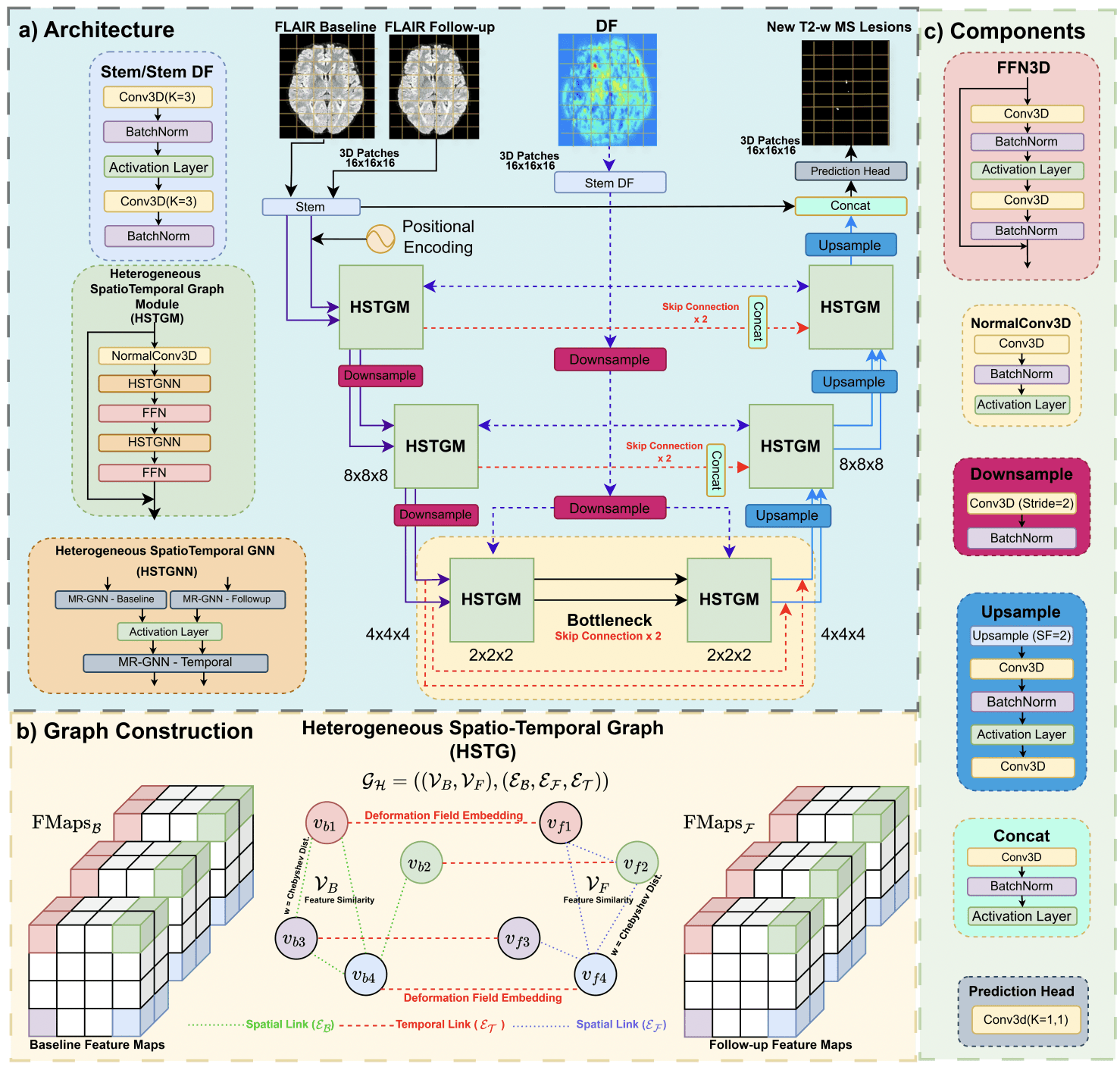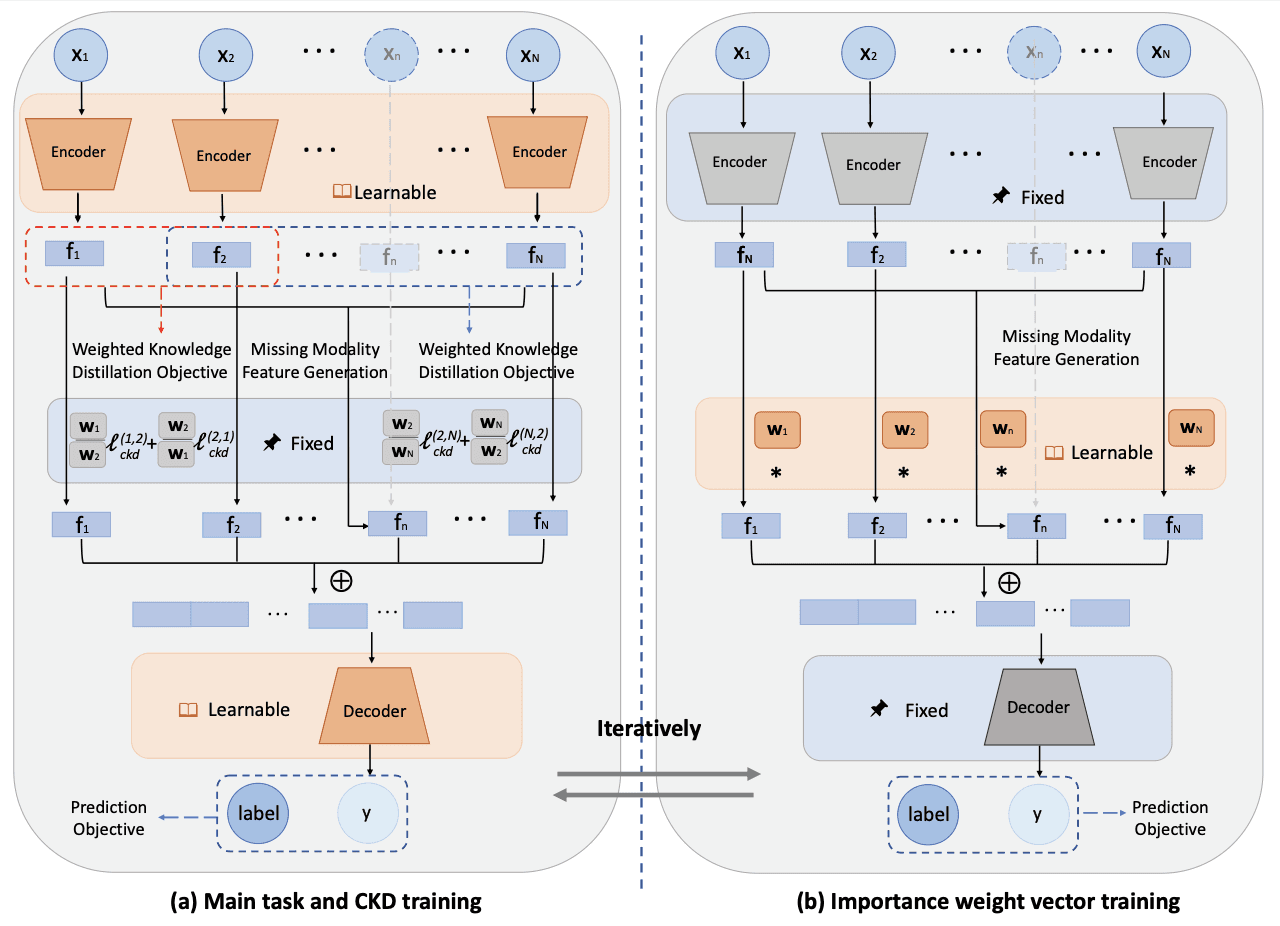
ClinGRAD is a clinically-guided heterogeneous graph neural network (GNN) developed for interpretable and accurate classification of dementia subtypes. By combining radiomics and genomics data using clinically validated connectivity patterns from diffusion-weighted imaging (DWI) and gene co-expression networks, ClinGRAD offers biologically grounded predictions with high accuracy and interpretability across Alzheimer’s Disease (AD), vascular dementia (VaD), mild cognitive impairment (MCI), and control (CTL) cases.
Key Contributions of ClinGRAD
Clinically-Guided Multimodal Fusion: Integrates MRI-derived radiomics and gene expression profiles using anatomical brain structure priors (from DWI) and molecular networks (gene co-expression), enforcing biologically plausible cross-modal relationships.
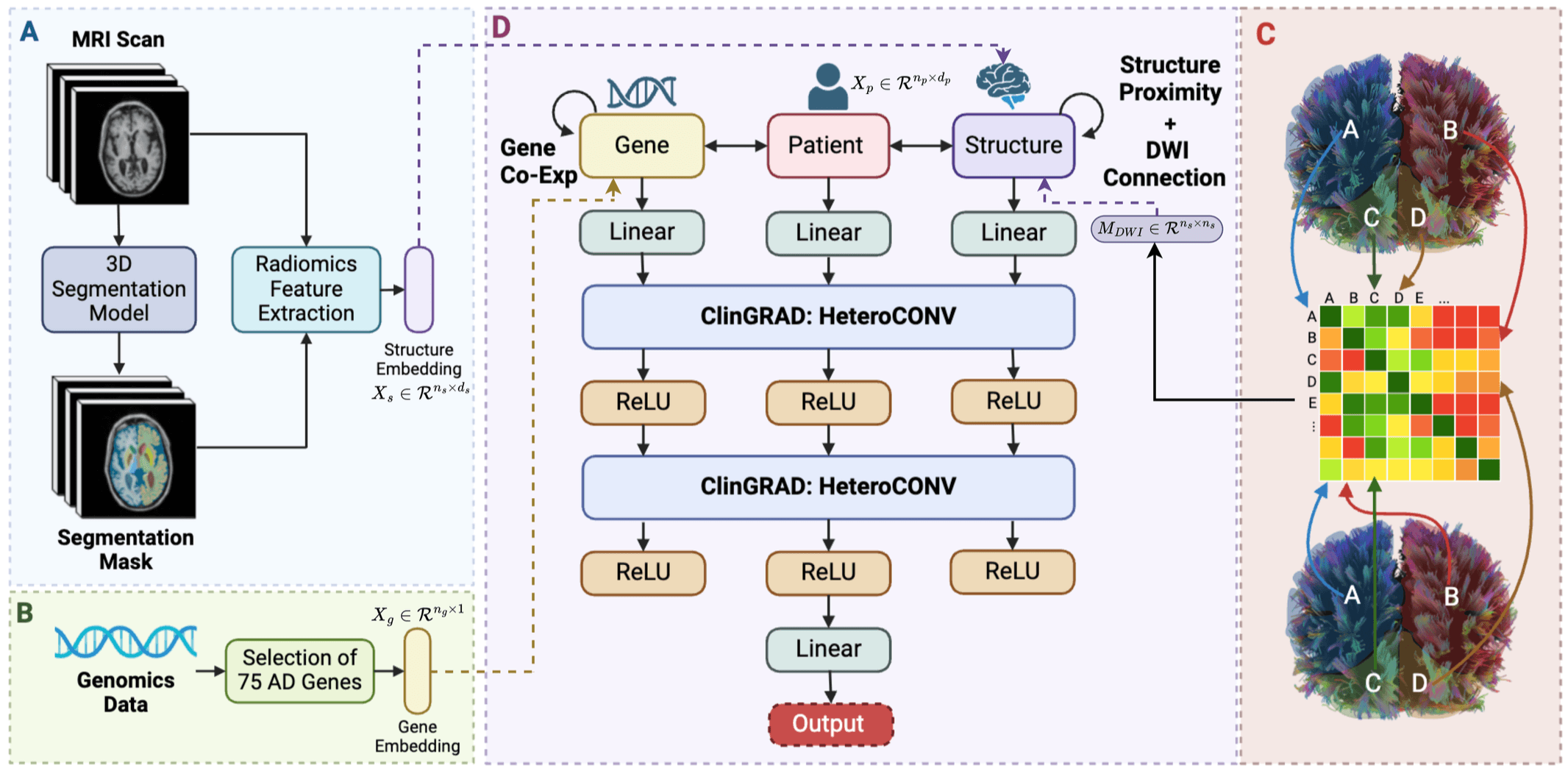
Multi-Scale Biological Modeling: Models interactions at three biological scales—molecular (gene-gene), meso-structural (brain regions), and patient level—using a unified graph structure that respects spatial and functional connectivity.
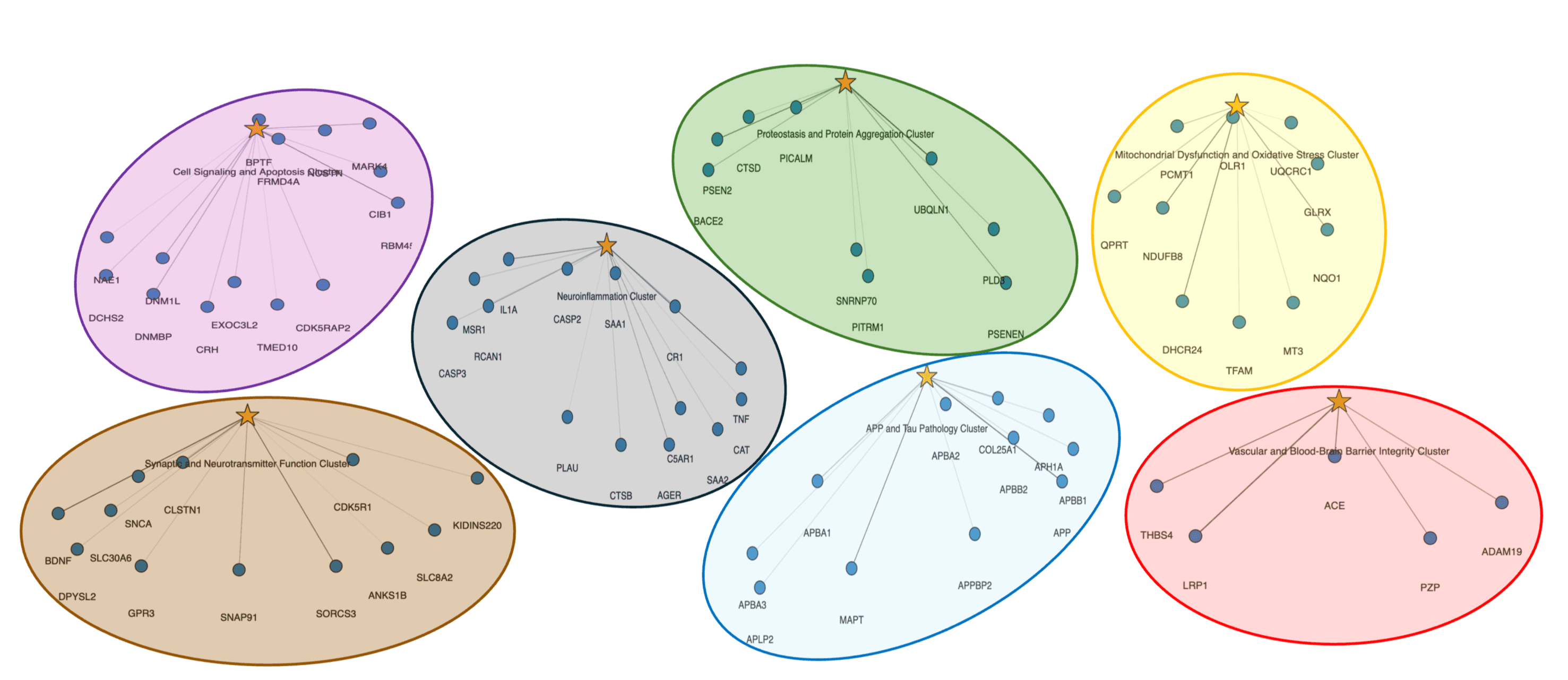
Gene Clustering via Functional Pathways: Introduces unsupervised gene supernode clustering aligned with known AD pathways (e.g., neuroinflammation, proteostasis), helping contextualize gene interactions in clinically meaningful groups.
Transparent Model Interpretation: Attention-based graph learning and post-hoc explainability tools (e.g., GNNExplainer) allow tracing predictions to key gene-structure interactions, enhancing trust and clinical usability.
AI Implementation in ClinGRAD
Heterogeneous Graph Design: Nodes represent patients, genes, and brain structures; edges include:
Patient–Gene: Links gene expression to diagnosis.
Patient–Structure: Connects radiomics features to patient nodes.
Gene–Gene: Weighted by co-expression scores from GeneMANIA.
Structure–Structure: Guided by DWI-derived connectivity and spatial proximity, with learnable weighting.
Graph Attention Networks (GAT): Used for message passing between heterogeneous node types with relation-specific attention, allowing the model to learn which interactions matter most per class.
Supernode-Based Gene Grouping: Functional modules are defined through gene clustering into supernodes based on shared biological pathways, visualized in graph attention outputs.
Methodology
Preprocessing and Feature Extraction
Radiomics: T1-weighted MRIs are segmented into 32 brain regions via SynthSeg; 107 features per region are extracted using PyRadiomics.
Genomics: Expression data for 75 AD-associated genes are extracted.
DWI Connectivity: Brain region connections are derived from validated diffusion-weighted imaging maps, encoding structural priors into the graph.
Graph Construction
Multimodal heterogeneous graph built using the above features and edge types.
Edge weights for structure–structure connections are learned via an MLP from anatomical distance and DWI connectivity.
Message Passing and Aggregation
Multi-head GAT layers compute attention weights for each edge type and aggregate neighborhood information into updated node representations.
Node embeddings from multiple layers are passed to a final classification head.
Classification
Patient nodes are used for predicting class probabilities across four classes (AD, VaD, MCI, CTL) using a softmax layer.
Results
Top Performance Across Tasks:
AD vs CTL: Accuracy = 98.75%
AD vs MCI: Accuracy = 94.25%
Multiclass (AD, MCI, CTL, VaD): Accuracy = 93.15%
ClinGRAD outperforms prior multimodal models such as MINDSETS, Flex-MOE, and FT-Transformer across all benchmarks.
Multimodal Integration Impact:
Genomic features alone outperformed radiomics, but the fusion of both improved accuracy by over 4%.
Adding DWI-guided edges improved performance by up to 2.2%, even on already strong baselines.
Edge Ablation Study:
Structural (anatomical) edges and gene co-expression links each contributed to meaningful accuracy gains, validating the clinical rationale behind the model’s architecture.
Interpretability and Clinical Relevance
Biologically Consistent Insights:
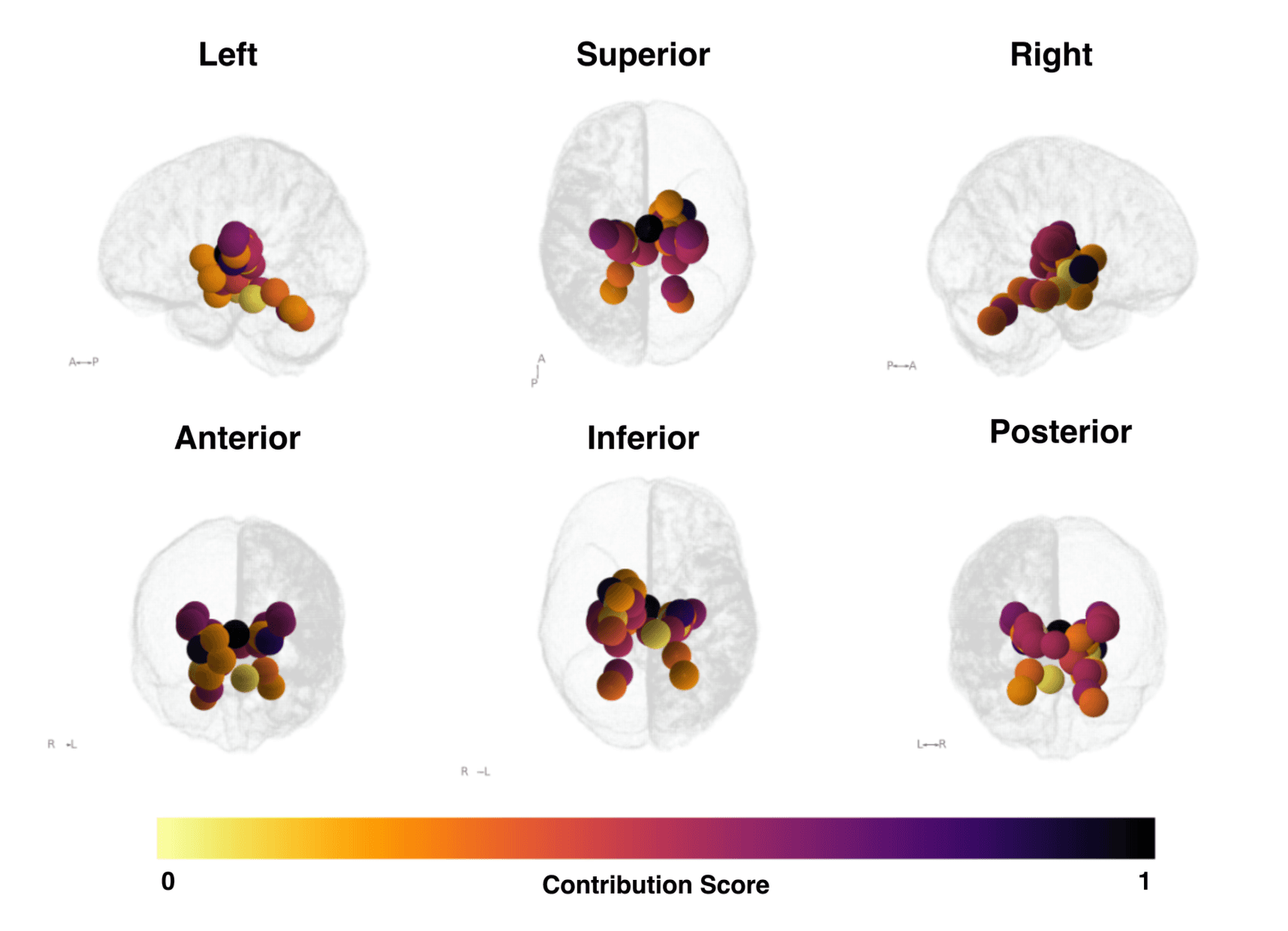
Attention heatmaps and subgraph explanations consistently highlight:
Medial temporal and limbic brain regions
Genes linked to neuroinflammation, mitochondrial dysfunction, and synaptic pathways
Pathway-Level Interpretability:
Seven gene clusters were identified:
Neuroinflammation
APP/Tau
Synaptic function
Vascular integrity
Mitochondrial processes
Proteostasis
Cell signaling
Transparent Predictions:
Outputs can be traced back to influential pathways and regions, making ClinGRAD suitable for clinical decision support and biomarker discovery.
Conclusion
ClinGRAD demonstrates how clinical priors and multimodal integration can elevate disease classification models in both performance and interpretability. Its biologically grounded graph design allows it to model complex gene-brain interactions underlying dementia, delivering state-of-the-art classification accuracy while maintaining transparency. With further validation, ClinGRAD could play a key role in precision diagnosis and treatment planning for neurodegenerative diseases.